I personally recommend clearly.it will help you to read faster and easily. A chrome extension you can download for free.Here
Showing posts with label Grammar. Show all posts

Saturday, 24 November 2018

When to use the subjunctive

The subjunctive is a specific verb form. It usually expresses something that you wish for, or a hypothetical rather than actual situation:

If only I were ten years younger.

I only wish that what you say were true.

 It is also used to indicate that something is being suggested or demanded:

The report recommends that he face the tribunal.

It is important that they be aware of the provisions of the Act.

In modern English it is distinguished from other verb forms only a) by the use of be and were instead of the indicative forms (am/is/are/was) as in the example above; and b) by lacking the final letter -s of the third person singular (he/she/it) in the present tense (in the example above he face, not he faces).

When is it used?
You are most likely to encounter the subjunctive in formal writing or speech. You’ll also encounter it in the following scenarios:

1.  In that-clauses
Nowadays it is probably most frequent in that-clauses with verbs such as demand, insist, pray, recommend, suggest, and semantically related nouns/adjectives, e.g. essential, important, insistence, proposal, etc.

She declined a seat beside Charles on the sofa. She insisted that Jane sit there.

It was suggested that he wait until the next morning.

It is important that they be aware of the provisions of the Act.

Note: In most such cases it can be replaced by should + infinitive or by the indicative form of the verb:

She declined a seat beside Charles on the sofa. She insisted that Jane sat there.

It was suggested that he should wait until the next morning.

It is important that they are aware of the provisions of the Act.

The use of the subjunctive instead of those alternatives is very frequent in American English.

In constructions of this type, any negation not (or never etc.) is normally placed before the subjunctive verb:

One essential quality for a holiday novel is that it not be too light.

I recommend that we not approve this letter. 

This construction is routine in American English, but less common elsewhere.

2. As if…, as though…, if…
After if (or as if, as though, unless) in hypotheses or comparisons:

If that were so, things would be very different.

It was as if Sally were disturbed in some way.

His voice strained as though he were walking on a wire above a pit of sharks.

The indicative may also be used, i.e. was instead of were, in all the examples above, but the subjunctive arguably conveys the hypothetical sense more forcefully.

3. If I were you…
Usage seems to be changing in phrases such as if I were you, if it were up to me, etc. People often say if I was you and if it was up to me, but the subjunctive is preferable in writing, especially any formal or academic prose. The phrase as it were, however, cannot be modified:

Having to ask permission, as it were, to see her friends

Suddenly, as it were overnight, the weather became hot and sultry.

4. Set phrases
For categories 1–3 using the subjunctive is optional. However, there are many set phrases which contain a hidden subjunctive as part of the phrase:

come what may
Far be it from me to…
God save the Queen!
Heaven forbid!
Perish the thought!
so be it
Thy kingdom come, thy will be done...
suffice it to say...
woe betide...
Possibly, it is failure to recognize that suffice it to say is subjunctive, with it as the grammatical subject, that leads many people to say suffice to say.

5. At the head of a clause
This kind of construction, with the subject after the verb, is more typically found in writing than in speech, where it might be considered rather formal.

Were I to get drunk, it would help me drown my anguish.

Unlike rival international fairs, be they in London, New York or Maastricht, the Biennale has enormous popular appeal.

For more on the subjunctive and other verb forms, see Moods.

Back to Grammar tips.

You may also be interested in:

Spilt infinitivesRelative clauses

Monday, 24 September 2018

Present simple tense

THE SIMPLE PRESENT TENSE IS USED:

  • To express habits, general truths, repeated actions or unchanging situations, emotions and wishes:
    I smoke (habit); I work in London (unchanging situation); London is a large city (general truth)
  • To give instructions or directions:
    You walk for two hundred meters, then you turn left.
  • To express fixed arrangements, present or future:
    Your exam starts at 09.00
  • To express future time, after some conjunctions: after, when, before, as soon as, until:
    He'll give it to you when you come next Saturday.


Formation


FORMING THE SIMPLE PRESENT TENSE: TO THINK

NegativeI
AffirmativeInterrogative
I thinkDo I think?I do not think
You thinkDo you think?You do not think
He thinksDoes he think?He does not think
She thinksDoes she think?She does not think
It thinksDoes it think?It does not think
We thinkDo we think?We do not think.
They thinkDo they think?They do not think.


EXAMPLES

  • For habits
    He drinks tea at breakfast.
    She only eats fish.
    They watch television regularly.
  • For repeated actions or events
    We catch the bus every morning.
    It rains every afternoon in the hot season.
    They drive to Monaco every summer.
  • For general truths
    Water freezes at zero degrees.
    The Earth revolves around the Sun.
    Her mother is Peruvian.
  • For instructions or directions
    Open the packet and pour the contents into hot water.
    You take the No.6 bus to Watney and then the No.10 to Bedford.


To Describe future

  • For fixed arrangements
    His mother arrives tomorrow.
    Our holiday starts on the 26th March
  • With future constructions
    She'll see you before she leaves.
    We'll give it to her when she arrives.

With future constructions

The present simple can be used to talk about talk about scheduled future events. These are events that happen according to a schedule or timetable. They are usually scheduled by someone else and they are usually public events.
Tomorrow is Friday.
I fly to Paris next week.
The plane departs at 8 p.m.
The train to Ottawa leaves at 11:30 a.m.
When do you leave for NYC?
Her train arrives at 8:35 a.m. tomorrow morning.
What time does the movie start tonight?
What time do you finish work tomorrow?
What time does the store open tomorrow?
Final exams start next week.
The concert begins at 6:30 p.m.
The Monet exhibit closes on Sunday.
The sale ends next week.

Important: Only the verbs below can be used in the simple present to talk about a future scheduled event:
  • arrive
  • be
  • begin
  • close
  • depart
  • end
  • finish
  • fly
  • leave
  • open
  • start

Dynamic versus stative verbs

The most important reason you need to know about these is because stative verbs can't usually be used in the progressive form. But more about that later!

Firstly, what do the words "dynamic" and "stative" mean?  

They aren't very common words in everyday English, but they are grammar terms you will need to know to understand this subject. 


Dynamic

"Dynamic" is an adjective which means something is moving or changing. 

In English grammar a "dynamic verb" means that the verb describes an action rather than a state. Dynamic verbs are sometimes known as "action verbs."

"Joe is chasing the bus."

"Joe is chasing the bus."


Stative

"Stative" is an adjective which describes something as having a state, or existing (this is a very uncommon adjective). 

In English grammar a "stative verb" means that the verb describes a staterather than an action.

Stative verbs are sometimes known as "state verbs." 

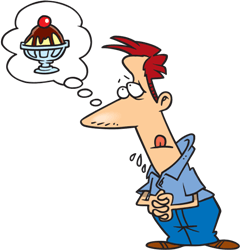
"Kevin wants some ice-cream."

"Kevin wants some ice-cream."

So now you know the meaning of the terms, let's look at some examples!

First, here is a list of some dynamic verbs. You can see that they are all used to describe an action, change, or process. Most of them are used to describe an activity which has a start and an end. 

Examples of dynamic verbs:
  • eat
  • walk
  • learn
  • grow
  • sleep
  • talk
  • write
  • run
  • read
  • become
  • go
These words can all be used in the progressive form. 

Example sentences with dynamic verbs:
  • "I can't talk right now, I'm eating dinner."
    Present progressive used to describe an action happening now.
  • "Sorry, I'm out of breath because I've been running."
    Present perfect progressive used to describe an action that started in the past, continued for some time and has results now.
  • "I didn't steal the necklace! I was sleeping when someone broke into the shop!"
    Past progressive used to talk about an action that was happening at a particular time in the past.
Here is a list of some of the stative verbs. Some of these describe relationships between things or people (for example, own) and some describe emotions or states of mind.

Examples of stative verbs:
  • love
  • hate
  • like
  • prefer
  • doubt
  • seem
  • know
  • own
  • understand
Here are some examples, showing that these words cannot be used in the progressive form.

Correct: "I like chocolate, but I prefer cake."
Incorrect: "I'm liking chocolate but I'm preferring cake."

Correct: "I don't understand you when you speak quickly."
Incorrect: "I'm not understanding you when you speak quickly."

There are also some verbs that can be either dynamic or stative, depending on their meaning and context in the sentence. I'm sure you know by now that there are many words in English that can have more than one meaning!

Examples of verbs that can be either dynamic or stative:
  • think
  • mind
  • have
  • smell
  • sound
Let's look at some examples of how these verbs are used differently.

Example sentences:
  • "I think it is wrong to hit children."
    Here, think is a stative verb. It means "to have an opinion" and it cannot be used in the progressive form in this case.

    BUT

    "I'm thinking about buying a new car."
    Here, thinking is describing a process, or an action. This is something that is happening, rather than simply being. So here we can use the progressive form.
  • "I don't mind if we watch a movie tonight."
    Here, mind means "be bothered by", which is a state of mind, not an action. Therefore, it is stative.

    BUT

    "I'm not being nosy. I'm minding my own business!"
    Here, minding means "looking after" and is therefore a process and a dynamic verb.
  • "I have three brothers."
    Have here talks about the family relationship the speaker has with her brothers and is therefore stative.

    BUT

    "I'm having a bad day today. I'll call you when things are better."

    Having in this sentence means the speaker is going through the process of a bad day. It is therefore dynamic.

All this may seem complicated, but if you read and listen to as much English as you can, you will soon start to know which verbs sound right in the progressive. If you keep the basic idea of dynamic verbs vs. static verbs in the back of your mind, it will help you greatly.

Now, let's practice!

Dynamic verbs and stative verbs exercises

Dynamic verbs and stative verbs exercises

Reminder: 
  • Actions that are in progress now => present progressive

    Example: We are walking right now.
  • States that occur now => simple present

    Example: We want to walk now.


Exercises

Dynamic verbs and stative verbs exercise 01

Dynamic verbs and stative verbs exercise 02

Dynamic verbs and stative verbs exercise 03

Dynamic verbs and stative verbs exercise 04

Dynamic verbs and stative verbs exercise 05
(Special exercise with verbs that have both dynamic and stative meanings)

Simple present instead of continues for state verb 


Stative verbs

Some verbs are not usually used in the continuous form, even when we are talking about temporary situations or states. These are called stative verbs.
  • So, we say I’m sorry, I don’t understand rather than I’m not understanding.
1. Stative verbs are often verbs connected with thinking and opinions.
  • She doesn’t know what to do NOT She isn’t knowing what to do
  • Do you agree with me?
  • I don’t recognise it, do you?
Other verbs in this group include: believe, doubt, guess, imagine, mean, remember, think

2. Other stative verbs are connected with feelings and emotions
  • I like this song. Who sings it? NOT I’m liking this song
  • What do you want to do now?
  • I hate my new boss!
Other stative verbs in this group include: dislike, love, prefer. want, wish

NB – although ‘enjoy’ is a verb of emotion, it is used in the continuous tense
  • I’m enjoying the party.
3. ‘see’, ‘hear’, ‘taste’, ‘smell’, ‘feel’ are verbs that describe senses.

These verbs aren’t usually used in continuous forms. They are often used with ‘can’.
  • It smells of smoke in here. NOT It’s smelling of smoke in here
  • I can’t see anything. It’s too dark.
4. Stative verbs describe things that are not actions.

Look carefully at these 2 sentences.
  • He smells of fish.
  • He’s smelling the fish.
The second sentence is an action – not a state. The man wants to know if the fish is OK to eat.
  • I think we should go to Croatia for our holiday this year.
  • Sorry, what did you say? I was thinking about my holiday.
The first sentence is an opinion but the second sentence is an action.

List of State verbs

Some English verbs, which we call state, non-continuous or stative verbs, aren't used in continuous tenses (like the present continuous, or the future continuous). These verbs often describe states that last for some time. Here is a list of some common ones:
Stative (or State) Verb List
likeknowbelong
loverealisefit
hatesupposecontain
wantmeanconsist
needunderstandseem
preferbelievedepend
agreeremembermatter
mindrecognisesee
ownappearlook (=seem)
soundtastesmell
hearastonishdeny
disagreepleaseimpress
satisfypromisesurprise
doubtthink (=have an opinion)feel (=have an opinion)
wishimagineconcern
dislikebehave
deserveinvolveinclude
lackmeasure (=have length etc)possess
oweweigh (=have weight)
A verb which isn't stative is called a dynamic verb, and is usually an action.
Some verbs can be both stative and dynamic:
Be
be is usually a stative verb, but when it is used in the continuous it means 'behaving' or 'acting'
  • you are stupid = it's part of your personality
  • you are being stupid = only now, not usually
Think
  • think (stative) = have an opinion
    I think that coffee is great
  • think (dynamic) = consider, have in my head
    what are you thinking about? I'm thinking about my next holiday
Have
  • have (stative) = own
    I have a car
  • have (dynamic) = part of an expression
    I'm having a party / a picnic / a bath / a good time / a break
See
  • see (stative) = see with your eyes / understand
    I see what you mean
    I see her now, she's just coming along the road
  • see (dynamic) = meet / have a relationship with
    I've been seeing my boyfriend for three years
    I'm seeing Robert tomorrow
Taste
  • taste (stative) = has a certain taste
    This soup tastes great
    The coffee tastes really bitter
  • taste (dynamic) = the action of tasting
    The chef is tasting the soup

    ('taste' is the same as other similar verbs such as 'smell')

Exceptions

sometimes you can use state verb in the continuous form

However, we can use the present continuous with a state verb if we want to emphasise that something is temporary or happening around the present time.
Examples:
  1. I am healthy and exercise every day. I love sports.
  2. I love to go to the park in the spring and look at the flowers.
  3. These days, my job is very interesting. I am loving it.
  4. I am really loving the cherry blossoms this year.
Sentences (1) and (2) are about something that is a state. It is always true. It is something that does not change (we know that from "every day" and "in the spring").
Sentences (3) and (4) are about temporary situations. We know that from the phrases "these days" and "this year". Sentence (3) says that right now, I am loving my job, but that perhaps that could change in the future. Sentence (4) says that the cherry trees look especially good right now, but soon the flowers will fall and the season will pass.